
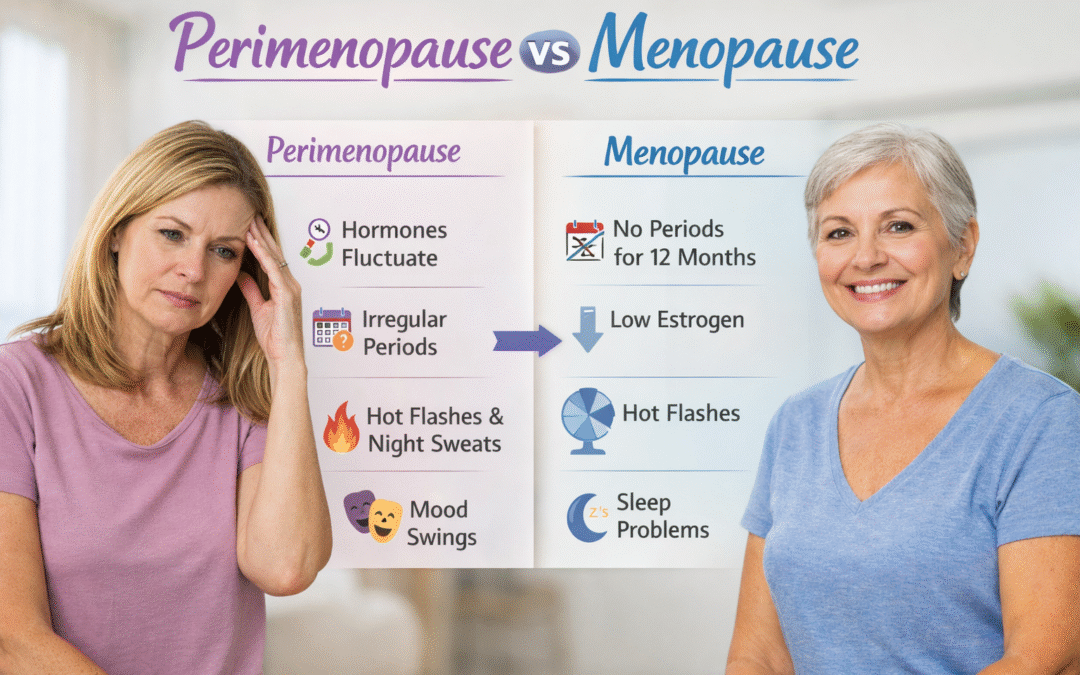
In their 40s and early 50s, women start to notice certain changes in their bodies, but many of them are confused as to whether these changes mean that they are in perimenopause or menopause. Both of these stages are closely related, and the symptoms often overlap; this is why you may feel unsure which stage you are in. Understanding the differences can help you feel more informed and prepared for these phases of life, so let’s explore them in simpler terms.
What Is Perimenopause?
Perimenopause is the transition phase that leads to menopause. During this time, the ovaries start producing less estrogen, and hormone levels fluctuate. This phase begins in the 40s, although some women may experience it in their mid-30s or later 40s. The stage can last from a few months to a few years. As hormone levels change unpredictably, symptoms can come and go. This can cause you to feel normal one month and completely different the next. As ovulation may still occur during this phase, it’s possible to get pregnant even if your cycles are irregular.
Common Signs of Perimenopause
- Mood swings
- Skipped cycles
- Decreased libido
- Sleep disturbances
- Anxiety or low mood
- Brain fog or forgetfulness
- Hot flashes or night sweats
- Irregular periods (shorter, longer, lighter, or heavier flow than usual)
What Is Menopause?
A woman is considered to be in menopause when she has not had her menstrual period for twelve consecutive months. In this phase, the ovaries reduce estrogen production considerably, and ovulation stops, making pregnancy impossible. In the U.S., the average age of menopause is around 51, but it can vary based on genetics, overall health, and several lifestyle factors.
Common Signs of Menopause
- Joint discomfort
- Weight changes
- Vaginal dryness
- Changes in skin or hair
- Sleep issues or insomnia
- Hot flashes and night sweats
- No menstrual periods for 12 months
How to Tell Which Stage You’re In
As many signs overlap in these phases, the easiest way to figure out which phase you are in is through your menstrual cycle. If you are having periods, even irregular ones, then you are likely in the perimenopause stage. However, if you haven’t had your period for the past 12 months in a row, then you have reached menopause.
Emotional Changes During Menopause
While talking about menopause, people usually focus on the physical shifts, but the mental shifts can feel just as disruptive. Fluctuating estrogen levels can affect serotonin and dopamine, which play an important role in managing mood, sleep, and stress. As a result, you may notice increased anxiety, mood swings, irritability, and concentration issues. These hormonal changes can affect emotional regulation, sometimes making it harder to cope on your own.
In such situations, getting the right support becomes important. At MySpectrum Coaching and Counseling, we offer counseling for menopause to help women process mental and emotional shifts that come with this stage of life. Reach out to us to schedule a consultation and take the next step toward a more balanced and supported life.